Modelling and Intake Matching in Group Settings
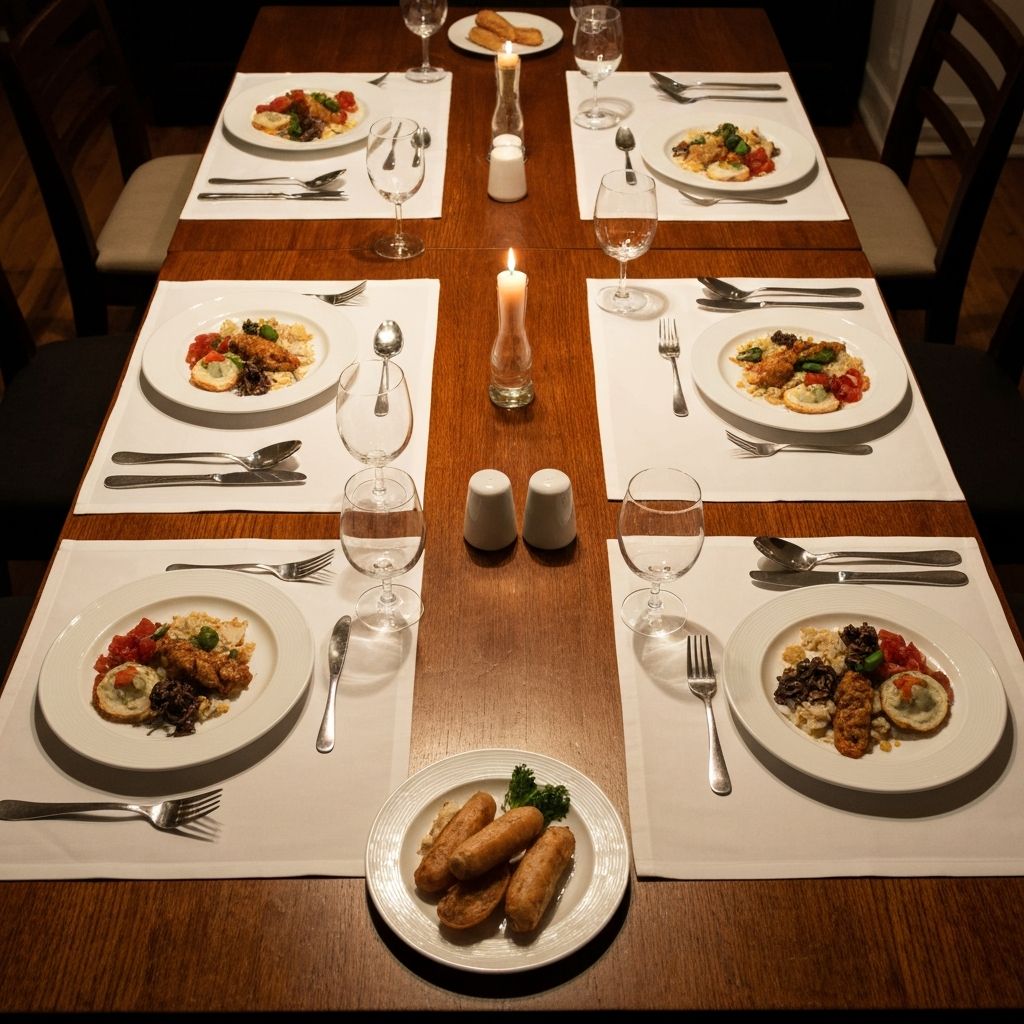
Understanding Dietary Modelling
Dietary modelling describes how individuals unconsciously align their food consumption with dining companions. When eating in groups, people tend to match not only the quantity of food consumed but also the pace and timing of eating. This intake matching occurs largely outside conscious awareness, representing an automatic social influence mechanism.
Modelling effects have been documented across diverse meal contexts and populations, suggesting a fundamental aspect of group eating dynamics. The consistency of these effects indicates that intake matching reflects robust underlying mechanisms rather than occasional or context-dependent phenomena.
Mechanisms of Matching
Intake matching operates through several psychological mechanisms. Visual observation of others' eating patterns provides cues that influence individual consumption choices. The quantity of food companions select and consume creates a reference point that influences individual portion selection and eating continuation.
Social learning processes contribute to matching effects, as individuals develop eating patterns consistent with social group norms. Over time, regular dining companions develop increasingly synchronised eating patterns through cumulative exposure and social learning. This suggests both immediate matching in single meals and longer-term pattern development through repeated social dining.
Strength of Modelling Effects
The strength of intake matching varies substantially across individuals and contexts. Individuals differ in their susceptibility to modelling influences, with some showing pronounced matching and others showing minimal synchronisation. These differences appear related to factors including attention to others, social orientation, and individual eating behaviour patterns.
Contextual factors influence modelling strength, with closer relationships and more formal dining situations showing different patterns. The specific identity of dining companions affects the degree to which individuals match their intake, with stronger effects observed with individuals of higher social status or greater perceived similarity.
Modelling of Healthy and Unhealthy Patterns
Modelling operates regardless of whether observed eating patterns would be characterised as restrictive or generous with food quantity. Individuals match both higher and lower consumption levels based on dining companions, suggesting that modelling mechanisms operate neutrally with respect to absolute consumption amounts. This indicates that social learning through modelling influences consumption direction without built-in preferences for particular outcomes.
The non-directional nature of modelling effects means that group eating contexts can reinforce either higher or lower consumption patterns depending on the eating behaviours prevalent in the group. This has implications for understanding how social circles influence eating patterns over time.
Interaction with Individual Preferences
Modelling effects interact with pre-existing individual food preferences. Individuals are more likely to match consumption of foods they prefer while showing less matching for dispreferred foods. This suggests that modelling represents one influence among multiple factors determining consumption, rather than completely overriding individual preferences.
Food familiarity influences modelling susceptibility, with stronger effects observed when dining companions consume familiar foods. Novel foods show more variable modelling effects, suggesting that comfort and familiarity with food options influence how strongly individuals match others' consumption patterns.
Long-term Effects of Modelling
Repeated dining with consistent group members may establish long-term synchronisation of eating patterns. Regular exposure to particular eating patterns may influence habitual food choices and portion preferences through cumulative social learning. The extent to which acute matching effects translate to long-term pattern changes remains incompletely understood.
Individual variability in the persistence of modelling effects suggests that some individuals develop relatively stable consumption patterns influenced by their regular social eating contexts, while others show more variable patterns. This variability reflects individual differences in the degree to which social exposure influences habitual eating.
Evolutionary and Cultural Perspectives
Modelling mechanisms appear consistent with evolutionary food-sharing behaviours and cultural transmission of eating patterns. From an evolutionary perspective, aligning consumption with group members may have provided benefits including resource efficiency and social cohesion. From a cultural perspective, modelling contributes to transmission of culturally-specific eating patterns across generations and social groups.
Back to Explorations